Hydroponic Growing Media: Rockwool vs. Coco vs. Clay vs. Perlite
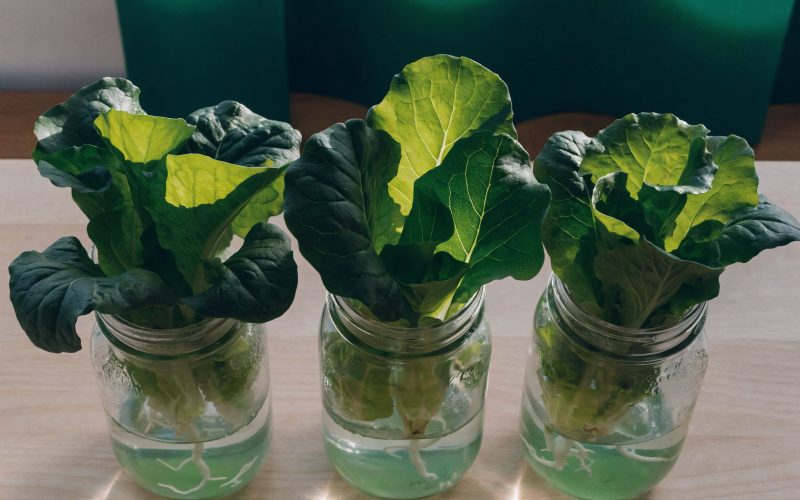
Choosing a growing medium feels like a minor decision until you get it wrong. The medium determines how much oxygen reaches your roots, how long the root zone stays moist between waterings, whether your reservoir pH stays stable, and how much labor you spend between grows. Choose the wrong medium for your system and you create management problems that compound over the life of every crop: pH instability, nutrient lockout, root rot, deficiencies that appear well-fed plants should not have.
This guide covers the four media that actually matter in modern hydroponics: clay pebbles, rockwool, coco coir, and perlite. It explains how each works mechanically, what preparation each requires before use, which systems each is designed for, and where each one fails. The goal is that after reading this, you can look at your system type and crop list and pick the right medium without guessing.
Why Growing Medium Choice Matters
In soil growing, the medium does nearly everything: it holds nutrients, supports root structure, buffers pH, hosts beneficial microorganisms, and regulates moisture. When you move to hydroponics, most of those jobs get transferred to the nutrient solution and your own management. But the medium still handles several critical functions:
Physical support. The medium holds the plant in place so roots can extend downward into nutrient solution or grow laterally through a container. Without it, plants tip over, roots tangle, and stems damage from movement.
Root zone oxygen. This is the function most growers undervalue. Roots need oxygen for aerobic respiration, and the medium’s drainage characteristics determine how much oxygen is present between waterings. A medium that holds too much water creates anaerobic zones at the root surface, the conditions that cause pythium (root rot). A medium that drains too fast may leave roots without moisture in drip systems with slow watering intervals.
pH stability. Some media are inert and have no effect on reservoir pH. Others are alkaline or acidic by nature and require preparation to neutralize before use. Put an unprepared alkaline medium in contact with a calibrated nutrient solution and the pH will drift up, locking out iron, manganese, and other micronutrients.
Water retention. Different systems have radically different watering schedules. DWC roots sit in nutrient solution continuously; the medium’s water-holding capacity is nearly irrelevant. Drip systems water at intervals; the medium must hold enough moisture to keep roots viable between cycles. Match the medium’s water retention to your system’s watering frequency or you will be fighting the mismatch in every grow.
System compatibility. Clay pebbles work well in systems with high drainage and no capillary action required. Coco coir works in drip systems because it retains enough moisture to stay active between waterings. Rockwool slabs work in commercial drip setups because they hold both water and air simultaneously at a ratio that commercial growers have calibrated over decades.
Get the medium-to-system match right from the start, and the rest of your management becomes predictable.
How to Evaluate a Growing Medium
When comparing media, five axes actually matter for practical decisions:
Water retention: How long does the medium stay moist after a watering event? This determines how often you need to water in drip systems, and whether roots will dry out between cycles. Rated on a scale from “very low” (perlite: drains in minutes) to “high” (coco coir: stays moist for hours).
Aeration: How much oxygen is present in the root zone? Inversely related to water retention for most media. High-drainage media have more air space. Good aeration is critical in any hydroponic system but especially in DWC, where roots are fully submerged and all oxygen comes from either dissolved oxygen in the solution or from air pockets in the medium above the waterline.
Reusability: How many grow cycles can you get before the medium degrades or requires replacement? This is both an economic and a labor consideration; reusable media reduce cost per grow but require cleaning and sterilization between cycles.
pH impact: Does the medium change the pH of the root zone or reservoir? Some media leach alkaline or acidic compounds. Inert media have no effect. Understanding pH impact determines what preparation a medium needs before use and whether ongoing pH drift will be an issue.
System compatibility: Which hydroponic system types is the medium designed for? This is the most direct evaluation criterion; matching medium to system design is more important than any single performance characteristic.
Clay Pebbles (Hydroton/LECA)
Clay pebbles, also sold as Hydroton (a brand name), LECA (lightweight expanded clay aggregate), or simply expanded clay, are fired clay pellets that have been heated to around 2,000°F until they expand and develop a porous internal structure. The result is a medium that is extremely well-draining, pH-neutral, fully inert, and reusable.
How they work: Clay pebbles create a root environment that is mostly air. The pebbles pack loosely, leaving large void spaces between them that drain freely and fill with atmospheric oxygen between waterings. Roots grow through these spaces and around the pebbles rather than through them. In DWC and Kratky systems, roots pass through the pebble layer in the net pot and extend down into nutrient solution below; the pebbles’ job is almost entirely mechanical: hold the plant upright and mark the boundary between air and solution.
Water retention: Low. Clay pebbles do not absorb water significantly; what moisture they hold sits in the tiny surface pores of the expanded clay. After drainage, the root zone is largely air. This is excellent for DWC and Kratky, where you want maximum oxygen in the net pot. It is a liability in drip systems with infrequent watering cycles, because the root zone can dry out between irrigations.
Aeration: High. Large void spaces between pebbles provide excellent oxygen access. In a net pot above a DWC reservoir, the air gap above the waterline that fills the pebble layer can hold 40–50% air by volume, far more than soil or coco coir.
Reusability: Full. Clay pebbles are the most reusable growing medium available. After a grow, remove root mass, rinse pebbles under running water, soak in dilute hydrogen peroxide for sterilization, rinse again, and they are ready for the next cycle. Well-maintained clay pebbles last for 5–10 grows without meaningful degradation.
pH impact: Neutral. Clay pebbles have no significant effect on reservoir or root zone pH. This makes them the easiest medium to use without special preparation; the only step required before first use is rinsing to remove clay dust.
Pre-use requirement: Rinse thoroughly. Fresh clay pebbles contain clay dust and manufacturing residue that will affect your EC meter readings and deposit sediment in your reservoir. Rinse in a strainer under running water until the water runs clear. You can also soak overnight in plain water and discard the brown-colored rinse water before use.
System fit: Clay pebbles work best in DWC systems, Kratky systems, and ebb-and-flow tables. They are the standard medium for these system types because their drainage characteristics match the watering approach: continuous submersion in DWC/Kratky, periodic flooding and complete drainage in ebb-and-flow.
Not ideal for: Drip systems. Unless your drip cycle runs very frequently (every 30–60 minutes), clay pebbles dry out between waterings and roots desiccate. Coco coir or rockwool are better choices for drip.
Cost: $2–$5 per liter. More expensive per use than coco coir or rockwool on first purchase, but the cost-per-grow drops dramatically with reuse, and by the fifth or sixth grow, the per-grow cost approaches zero.
Rockwool (Stonewool)
Rockwool, also called stonewool, is made by melting basaltic rock and limestone at very high temperatures, then spinning the melt into fibers (the same process used for thermal insulation in construction). The fibers are pressed into cubes, slabs, or loose granular form. It is the most widely used growing medium in commercial hydroponic operations worldwide for one reason: it holds both water and air simultaneously at a ratio that is nearly ideal for most crops, especially in NFT and drip systems.
How it works: The fibrous structure of rockwool creates a network of tiny capillary spaces that hold water through surface tension while leaving larger channels between fiber bundles open to air. Unlike soil, which compacts and restricts drainage over time, rockwool’s fiber structure stays consistent and does not compress under root pressure. After a watering event, a properly prepared rockwool slab or cube holds roughly 80% of its volume as water and 20% as air, a ratio that matches the oxygen and moisture needs of most actively growing crops.
Water retention: Medium to high. Rockwool holds moisture well, which is why it works for drip systems even with longer watering intervals (every 4–6 hours is manageable). The water retention is high enough to bridge typical drip cycles without root desiccation, but the fiber structure still allows enough air exchange for active root respiration.
Aeration: High, despite the water retention. This is what makes rockwool exceptional; it achieves high water retention without sacrificing oxygen availability. The fiber channels provide meaningful air space even when the cube is fully saturated, which is why commercial growers trust it for high-value crops where root health determines yield.
Reusability: None. Rockwool is a single-use medium. The fiber structure degrades after one grow cycle as roots colonize and die within it. You cannot effectively sterilize rockwool between grows because the dead root material is embedded throughout the fiber matrix and cannot be removed without destroying the medium. Budget rockwool as a per-grow cost.
pH impact: Alkaline, and this matters a great deal. Fresh, unprepared rockwool has a pH of 7–8 due to calcium silicate and other alkaline compounds present in the raw material. If you use rockwool without preparation, these compounds leach into your reservoir and push pH up, sometimes by a full unit or more within the first few days. In a carefully maintained hydroponic system where you are trying to hold pH at 5.8–6.2, this is a significant disruption that can lock out iron, manganese, and zinc and cause visible deficiency within the first week.
Pre-use requirement: this is mandatory. Pre-soak all rockwool in pH 5.5 water for a minimum of one hour before use. Overnight is better. The acidic water neutralizes the alkaline leaching compounds and brings the medium’s baseline pH down before it contacts your reservoir or nutrient solution. To pre-soak: mix plain water down to pH 5.5 using pH Down, submerge the rockwool completely (use a weight if needed, as rockwool floats initially), and let it soak. After soaking, check the pH of the soak water. If it has risen above 6.5, discard the water, mix fresh pH 5.5 water, and soak again until the soak water stabilizes at or below pH 6.0. This confirms the alkaline compounds have been neutralized. Do not skip or shorten this step. Rockwool that has not been properly pre-soaked will raise your reservoir pH within hours of contact and can cause pH instability that takes days to correct.
Available forms:
- Cubes (small, 1–4 inch): For seed germination and clone rooting. The most common entry point with rockwool. Start seeds or clones in pre-soaked cubes on a humidity tray, then transplant cube-and-all into a net pot or larger slab.
- Slabs (large format, 4–8 inch thick): For mature plants in commercial or semi-commercial drip systems. Each plant site sits in its own slab or shares a continuous slab with multiple plants. Used extensively in commercial tomato, pepper, and cucumber production.
- Loose granulate: A less common form used similarly to clay pebbles in net pots. Has the same water-retention advantages as block rockwool in a loose format.
Handling: Wear gloves and avoid breathing the dust. Rockwool fibers are physically irritating to skin and mucous membranes, not chemically toxic, but mechanically abrasive. Wet rockwool generates much less dust than dry rockwool, which is another reason pre-soaking is the right first step.
System fit: Rockwool cubes are the standard for NFT systems (nutrient film technique), where a thin film of nutrient solution flows continuously over the root zone. Cubes are also the propagation medium of choice before transplanting into DWC or ebb-and-flow systems. Rockwool slabs are the industry standard for large-format drip systems.
Cost: $0.50–$1.50 per cube depending on size and quantity. Slabs run $3–$8 per slab.
Coco Coir
Coco coir is made from the fibrous husks of coconut shells, a byproduct of coconut processing that would otherwise be waste material. The husks are processed, washed, and dried into a fibrous substrate that looks and feels somewhat like peat moss but behaves differently in hydroponics. It has become one of the most popular media for drip hydroponic systems and soil-free growing because it combines good water retention with genuine aeration capacity and is biodegradable.
How it works: Coco coir’s fiber structure is different from both rockwool and soil. It has both large macropores (for drainage and aeration) and small micropores (for water retention). After a watering event, excess water drains through the macropores while capillary forces retain moisture in the micropores, creating a root environment that stays aerated while remaining moist. This makes it well-suited to drip systems where watering happens at intervals rather than continuously.
Water retention: High. Coco coir retains significantly more moisture than clay pebbles or perlite. After watering, the root zone stays moist for hours, which means drip systems can run with longer intervals between cycles (2–4 waterings per day at low volume rather than continuous drip). The flip side: coco does not tolerate drying out. Unlike rockwool, which can recover fully from brief dry periods, coco that dries completely hydrophobizes; the dry fibers repel water rather than absorbing it, creating uneven irrigation where water channels through rather than spreading through the medium. Maintain consistent moisture; do not let coco dry between waterings.
Aeration: Medium. Better than most soil mixes, but not as high as clay pebbles or perlite. The macropore structure provides meaningful air space, but because coco retains moisture, air spaces are partially filled after watering. For most drip-system crops, this balance is ideal: enough oxygen for active root function, enough moisture to support nutrient uptake between waterings. For crops that demand very high oxygen at the root zone (some fruiting crops in commercial settings), perlite is added to the coco to increase air space.
Reusability: Partial. Coco coir degrades more slowly than rockwool but does degrade. After one grow, the fiber structure breaks down slightly, reducing both water retention and drainage capacity. The larger issue is pathogen accumulation; unlike clay pebbles, coco coir cannot be effectively sterilized by rinsing alone. If you have had pythium or other root pathogens in a coco grow, the coir should be disposed of, not reused. Clean coco from an unaffected grow can be reused once or twice, but most growers treat it as semi-disposable and replace it every 1–2 grows.
pH impact: Slightly acidic. Fresh coco coir typically has a pH of 5.5–6.5, which is within or close to the target range for hydroponics. It will not cause dramatic pH crashes like unprepared rockwool, but fresh coco from low-quality sources can have variable pH and higher salt content. More importantly, coco coir has a high cation exchange capacity (CEC), the most critical characteristic to understand before using it.
Pre-use requirement: also mandatory. Coco coir must be pre-buffered before first use. Here is why this matters and what it means in practice:
Cation exchange capacity refers to the medium’s ability to hold and exchange positively charged ions (cations) like calcium (Ca²+), magnesium (Mg²+), potassium (K+), and sodium (Na+). Fresh coco coir comes loaded with sodium and potassium ions from the coconut plant’s natural chemistry and the processing water used during manufacture. When you introduce nutrient solution to unbuffered coco, the medium preferentially grabs calcium from your solution, the highest-affinity cation, and releases sodium and potassium in exchange. This process is not subtle. Within the first week of a grow in unbuffered coco, you will see classic calcium deficiency symptoms: brown, distorted, or necrotic new growth (because calcium is immobile in plants and new growth depends on continuous supply). Plants look malnourished despite a full nutrient solution, because the medium is actively removing calcium before roots can absorb it.
Pre-buffering saturates the coco’s exchange sites with calcium and magnesium before the plants arrive, so the medium stops competing with your nutrient solution. The process: mix a solution of cal-mag supplement at 2–4 mL per gallon in plain water. Fully wet the coco coir with this solution, ensuring complete saturation. Let it sit for 24 hours (the exchange process takes time; a quick rinse is not sufficient). Drain and allow excess to run off. The coco is now ready for use with a standard nutrient solution.
After buffering, you still need to supplement with cal-mag as part of your regular nutrient program; coco is a calcium-hungry medium even after buffering, because the exchange dynamic never fully disappears. Most coco growers add 1–2 mL/gal of cal-mag to every nutrient solution mixing session as a standing protocol.
Watering frequency: Coco rewards frequent, low-volume watering. The ideal schedule in a drip system is 2–4 irrigations per day of short duration, enough to wet the medium but not flood it. This keeps the moisture level consistently in the range where air and water coexist in the macropores. Infrequent large waterings lead to wet-dry cycles that stress roots and can cause hydrophobicity if the coco gets too dry.
System fit: Best for drip systems and hand-watered setups. Used extensively in commercial cannabis production (a crop where the water retention and control characteristics of coco align well with the plants’ needs). Also suitable for hand-watered container growing as a direct replacement for soil in a soil-free setup.
Cost: $0.50–$1.50 per liter when bought as compressed bricks (which expand significantly when wetted; a 650g brick typically yields 9–11 liters of wet coco).
Perlite
Perlite is expanded volcanic glass, specifically crude volcanic glass ore (obsidian or similar) that has been heated to around 1,600°F until the water trapped within the glass vaporizes and pops the material into a light, porous structure. The result is a white or off-white granular material that is almost entirely air space, with very little water-holding capacity.
How it works: Perlite’s structure is predominantly macropores, large void spaces that allow water to pass through freely without retention. Unlike coco coir, perlite holds almost no water once drained. Its value is aeration: adding perlite to another medium increases the proportion of air space in the root zone.
Water retention: Very low. After watering, perlite drains almost completely within minutes. A root zone of pure perlite would dry out so quickly in any drip system that roots would desiccate between waterings unless you run continuous drip. This is why perlite is almost never used as a standalone medium.
Aeration: Very high. Perlite’s near-complete drainage means very high air content after drainage, the best aeration performance of any common growing medium. This is its primary contribution to coco/perlite mixes: increasing the air fraction in a medium that would otherwise hold too much water for crops with high oxygen demand.
Reusability: No. Perlite is not effectively reusable. It is fragile; the porous structure degrades and the granules break down under physical pressure, watering, and root growth over a single crop cycle. After one grow, the structural integrity is reduced and the aeration benefit is diminished. Treat perlite as a single-use amendment.
pH impact: Neutral. Perlite has no meaningful effect on solution pH.
As an amendment: The standard coco/perlite ratio is 70% coco coir to 30% perlite by volume. This ratio improves drainage and aeration in coco without sacrificing the moisture retention that makes coco valuable in drip systems. For crops with high root-zone oxygen demand (tomatoes, peppers in flowering stage), some growers run 60/40 or even 50/50 coco/perlite.
System fit: Drip systems, always as an amendment with coco coir. Perlite is not designed to stand alone and does not work well in DWC or Kratky (it floats, is difficult to contain in net pots, and provides no benefit over clay pebbles in those systems).
Cost: $0.30–$0.80 per liter. One of the cheapest inputs in hydroponic growing.
The Decision Matrix
| Medium | Water Retention | Aeration | Reusable | pH Impact | System Fit | Beginner? |
|---|---|---|---|---|---|---|
| Clay pebbles | Low | High | Yes (rinse + sterilize) | Neutral | DWC, Kratky, ebb-and-flow | Best |
| Rockwool | Medium-High | High | No | Raises pH (must pre-soak at pH 5.5) | NFT, drip, DWC propagation | Good (prep required) |
| Coco coir | High | Medium | Partial (1–2 grows) | Slightly acidic, high CEC | Drip, hand-watered | Good (pre-buffer required) |
| Perlite | Very Low | Very High | No | Neutral | Amendment only (with coco) | Mix with coco only |
The matrix simplifies, but the key insight is that each medium has one or two properties that define when to use it and when not to. Clay pebbles are defined by high drainage and reusability. Rockwool is defined by the water-to-air balance and the mandatory pH preparation. Coco is defined by water retention and the CEC buffering requirement. Perlite is defined by aeration; it is always in service of another medium.
Which Medium for Which System
Matching medium to system type is the most important decision, and the table above does not make it explicit enough. Here is the direct mapping:
Kratky (passive hydroponics): Clay pebbles. The Kratky method suspends net pots over a reservoir, and the medium’s job is to hold the plant upright while roots grow through into solution below. Clay pebbles in a Kratky system drain completely, provide maximum air space in the net pot, are easy to clean between grows, and have no pH effects on the static reservoir. There is no meaningful advantage to using any other medium in Kratky.
DWC (Deep Water Culture): Clay pebbles or rockwool cubes for propagation. In DWC systems, the medium sits in the net pot above the reservoir waterline, the same mechanical role as Kratky. Clay pebbles are the right choice here. For growers who start plants in rockwool cubes (common in commercial and semi-commercial settings), the cube gets dropped into a net pot surrounded by clay pebbles, which provide structural support while the rockwool holds the root plug together during transplant.
NFT (Nutrient Film Technique): Rockwool cubes for propagation, transitioning to bare roots in the channel. NFT grows plants in channels where a thin film of nutrient solution flows continuously over exposed roots. Plants are typically started in rockwool cubes, and by the time they are established, roots extend out of the cube and into the NFT channel, where they run bare. The rockwool cube at the base of each plant is vestigial once roots are established but remains in place as a structural holder.
Ebb-and-Flow (Flood and Drain): Clay pebbles or rockwool. Ebb-and-flow tables flood periodically with nutrient solution, then drain completely. Clay pebbles work well because they drain fully after each flood, leaving air in the root zone between cycles. Rockwool works because its water retention bridges the drainage interval well for most crops.
Drip systems: Coco/perlite 70/30 mix or rockwool slabs. Drip systems deliver nutrient solution on a timer, and the medium must hold enough moisture between drip cycles to keep roots from drying out. Clay pebbles fail here unless drip cycles run every 30 minutes or less. Coco/perlite or rockwool slabs match the moisture retention needed for standard drip intervals (every 2–6 hours).
Common Mistakes and How to Avoid Them
Most failures with growing media come from one of five preparation mistakes. Each one has a clear mechanism and a clear prevention:
Not pre-soaking rockwool. This is the most common and most damaging mistake. A grower gets rockwool, adds it to their system, mixes a perfect nutrient solution at pH 6.0, and checks back the next morning to find pH at 7.2. Every nutrient that requires acidic conditions to stay in available form, iron, manganese, zinc, copper, is now locked out. The plants look fine for a few days, then new growth shows interveinal chlorosis (yellowing between veins on new leaves). By the time you diagnose what happened, you have lost 5–10 days of growth and may need to flush and restart. The fix is simple and takes 12 hours: pre-soak all rockwool in pH 5.5 water before it touches your system. Do it every time, without exception.
Not pre-buffering coco coir. Symptoms appear in week one: new growth is distorted, brown at the margins, or shows the blistered, cupped appearance of calcium deficiency. The nutrient solution looks correct. EC is on target. pH is fine. But the coco has been stripping calcium from the solution since the first watering, and new growth is the first to show it. Adding more calcium after the fact helps but does not immediately reverse the deficiency; calcium is immobile in plants, so already-affected tissue stays damaged. Pre-buffering with cal-mag solution before the first planting takes 24 hours and prevents a week of deficiency at the most critical growth stage.
Not rinsing clay pebbles. Clay pebbles come with manufacturing dust and residue that reads as elevated EC on your meter. If you measure your nutrient solution after adding unrinsed pebbles to your system, the EC reading will be higher than actual nutrient concentration, leading you to add less nutrient than you should. The residue also clouds water and deposits sediment in the reservoir. Rinse pebbles until the water runs clear before any use, including between-grow reuse.
Using perlite alone. Perlite alone in a drip container dries out between waterings fast enough that roots desiccate even with frequent cycles. The root zone goes from wet to dry without holding the in-between moisture state that roots need for sustained growth. Always use perlite as part of a coco/perlite mix, not standalone.
Reusing coco coir without sterilization. Coco coir that has hosted one crop is colonized by root zone bacteria, fungi, and, in any grow that has experienced root stress, potentially pathogenic organisms. Reusing it without sterilization means starting the next crop in an environment biased toward whatever organism population dominated the previous grow. At best, this means slower root development. At worst, it means introducing pythium to a fresh crop. If you reuse coco, sterilize it between grows with a dilute hydrogen peroxide flush (3% H2O2 at 30 mL per liter of plain water, applied until runoff, then rinsed with plain water). Better practice: replace coco after each grow or at most every two grows.
Cost Over Time
Single-purchase cost comparisons between media are misleading because reusability dramatically changes the per-grow economics.
Clay pebbles: $2–$5 per liter on initial purchase. Reusable for 5–10 grows. Per-grow cost by grow 5: $0.40–$1.00 per liter. The sterilization materials (hydrogen peroxide) cost pennies per cleaning. This is the most cost-efficient medium over time for systems that can use it.
Rockwool: $0.50–$1.50 per cube (propagation cubes), $3–$8 per slab. No reusability: every grow requires fresh rockwool. For a 10-site system using cubes, budget $5–$15 per grow in medium cost. For slab-based commercial setups, rockwool is a significant ongoing input cost that commercial operations offset through yield premiums and efficiency at scale.
Coco coir: $0.50–$1.50 per liter for compressed brick (which expands 8–10x). A 5kg brick ($10–$15) yields 40–60 liters of usable coco, enough for a significant drip setup. Semi-reusable, so budget for partial replacement every 1–2 grows. For most setups, coco coir is the cheapest medium per unit volume on initial purchase.
Perlite: $0.30–$0.80 per liter. Single-use. In a 70/30 coco/perlite mix, perlite adds relatively low cost per grow.
For DWC and Kratky growers: Clay pebbles are the economical choice over any multi-grow horizon. Initial cost is moderate; ongoing cost approaches zero with proper care.
For drip system growers: Coco/perlite is the most cost-effective medium pair. Coco is cheap per liter, perlite is cheap, and the combination performs better than either alone for drip applications.
For NFT and commercial growers: Rockwool’s per-grow cost is real but acceptable in systems where the medium’s water-to-air balance is the enabling factor for consistent commercial-scale yields.
Root Zone and Environment
Growing medium choice does not exist in isolation from the rest of your environmental management. The root zone is one half of the plant’s environment, and the root zone environment connects to aerial environment in ways that affect how the medium performs.
High vapor pressure deficit (VPD) increases transpiration, which increases nutrient uptake through the roots, which increases the rate at which the medium’s moisture is depleted. A coco coir setup calibrated for 2 waterings per day at low VPD may need 4 waterings per day at higher VPD to maintain the same moisture level in the root zone. This is not a medium problem; it is a system-environment coupling problem. Monitor VPD and adjust watering frequency accordingly rather than changing medium as a response to environmental variables.
Similarly, getting the nutrient solution mixing right is the other prerequisite for medium performance. The best medium in the world does not compensate for incorrect EC, pH out of range, or missing micronutrients. Medium choice affects how nutrients are delivered to roots; nutrient solution quality determines what is available to deliver.
Choosing Your Medium
If you are new to hydroponics and have not yet committed to a system type, the choosing a system guide is worth reading first: system type determines medium choice more directly than any other factor.
If you already know your system, the decision is straightforward:
Kratky or DWC: Use clay pebbles. Rinse before use. They will last the life of your setup.
Drip system: Use coco/perlite 70/30. Pre-buffer the coco before use. Add cal-mag to every nutrient mix.
NFT: Use rockwool cubes for propagation. Pre-soak at pH 5.5 before use. Budget for per-grow replacement.
Commercial drip (slabs): Use rockwool slabs. Pre-soak all slabs at pH 5.5. Track medium age and replace on schedule.
Every medium discussed here works reliably when matched to the right system and prepared correctly. The preparation steps, pre-soaking rockwool, pre-buffering coco coir, rinsing clay pebbles, are not optional extras. They are the difference between a medium that performs as described and one that creates problems you will spend weeks diagnosing. Do the preparation, match the medium to the system, and the growing medium will stop being a variable you need to think about.
[ FAQ ]
Can I reuse clay pebbles between grows?
Yes. Clay pebbles (hydroton/LECA) are the only major growing medium that is fully reusable. After harvest, remove the old root mass, rinse the pebbles thoroughly under running water to remove dust and organic residue, then soak in a dilute hydrogen peroxide solution (3% H2O2 at 1 part per 10 parts water) for 30 minutes to sterilize. Rinse again with plain water before reuse. Properly cleaned clay pebbles can last 5–10 grows without degradation. The only reason to replace them is if they develop persistent odor after sterilization or if you have had a serious pathogen outbreak.
What is the best growing medium for DWC hydroponics?
Clay pebbles. In a deep water culture system, roots grow through the net pot and directly into aerated nutrient solution; the growing medium's primary job is to hold the plant upright and let roots pass through unobstructed. Clay pebbles drain completely, are pH-neutral, and allow full root passage without restriction. Rockwool cubes also work in DWC as the initial propagation medium: start seeds or clones in rockwool, then drop the cube (with plant) into a net pot filled with clay pebbles. The rockwool holds the initial root structure while clay pebbles fill the rest of the pot.
Why is my rockwool raising my reservoir pH?
Because fresh rockwool has a naturally alkaline pH of 7–8, caused by calcium silicate compounds that leach out of the material when it contacts water. If you put dry or improperly prepared rockwool in contact with your reservoir, those compounds dissolve into the solution and push pH up, sometimes dramatically, by 0.5–1.5 units. The fix is mandatory pre-soaking: submerge rockwool in water adjusted to pH 5.5 for at least one hour (overnight is better) before introducing it to your system. The acidic water neutralizes the leaching compounds. After pre-soaking, check the soak water's pH: if it has risen above 6.5, repeat with fresh pH 5.5 water until the soak pH stabilizes below 6.0.
Do I need to flush coco coir before using it?
Yes, but flushing alone is not enough. You need to pre-buffer it. Rinsing removes salts from the manufacturing process, which is important. But coco coir has a high cation exchange capacity (CEC), meaning it actively holds calcium and magnesium ions and will release them for sodium and potassium ions. When you add a standard nutrient solution to unbuffered coco, the coco swaps its stored sodium for calcium from your solution. The result: calcium deficiency symptoms (brown, distorted new growth) within the first week even with a calcium-rich nutrient solution. Pre-buffering means soaking the coco in a dedicated cal-mag solution (2–4 mL/gal in plain water) for 24 hours, draining, then treating it as ready to use. After buffering, standard calcium levels in your nutrient solution will stay available to roots.
Can I use regular potting soil in a hydroponic system?
No. Potting soil is formulated to hold moisture and provide a buffered environment for soil microorganisms, both properties that cause serious problems in hydroponic systems. Soil particles wash into the reservoir, clog pumps, and raise EC unpredictably. The high organic matter content creates anaerobic pockets in a wet hydroponic environment, fueling pathogenic root rot. pH buffering in soil works differently from how it works in solution, meaning your reservoir pH will fluctuate in ways that are difficult to correct. If you are transitioning a plant from soil to hydroponics, bare-root it completely. Wash all soil from the roots before introducing it to a hydroponic container.
Related Articles

VPD Chart for Plants: How to Read It and Control Humidity
Learn what vapor pressure deficit is, how to read a VPD chart, and what ranges to target at each plant growth stage to optimize growth and prevent mold.
Mixing Hydroponic Nutrients: EC, pH, and Common Mistakes
A step-by-step guide to mixing hydroponic nutrient solutions: target EC by crop, the correct addition sequence, pH adjustment, and common mixing mistakes to avoid.